
Freedom and the Cage Within
The Painted BirdThis thread explores the difference between physical escape and inner freedom, as the boy moves from flight to belonging and finally confronts the pull of family ties.
increasing Bearing strength in each event
 decreasing
Bearing strength in each eventdecreasingThe Comet as Portable Shelter
Self-Reliance on the Move
A Tool for Survival
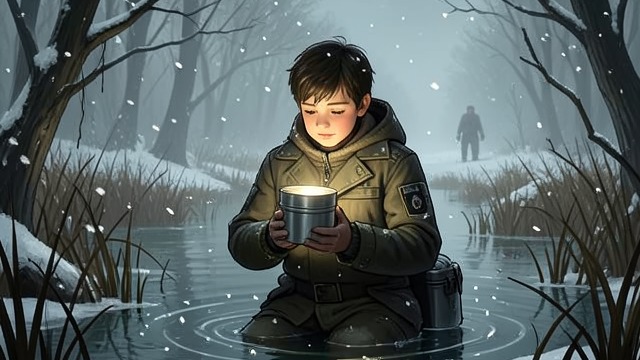
Alone in the marshes, the boy remembers the portable fire Olga called a comet. Its heat lets him cook, endure cold, and frighten away dogs or people who might attack him.
The comet turns fire into something he can carry rather than depend on a household to provide. It is a small but important form of practical independence in a world where shelter is often conditional.
Freedom with a Price
The boy obtains fuel, approaches settlements cautiously, and travels between dangers. His movements are freer than they were inside any one household, but he remains exposed to hunger, weather, and violence.
The portable fire therefore represents survival rather than secure belonging. He can keep himself alive for a time without a protector, but self-sufficiency does not make the hostile world safe.
Lekh’s Painted Prisoner
The Cost of Being Marked
A Bird Made Different
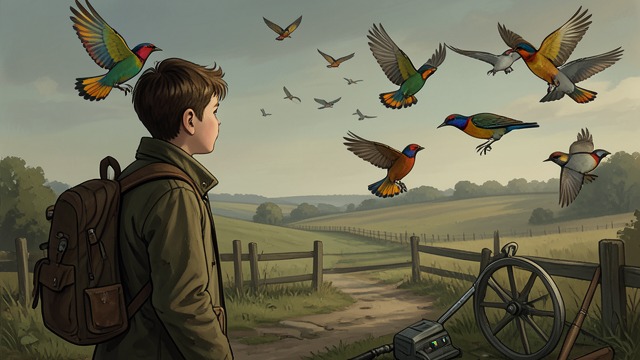
When Stupid Ludmila stops appearing, Lekh begins painting captured birds in brighter colors and releasing them toward their flocks. The birds try to return to their own kind, only to be attacked because the paint makes them appear alien.
The boy watches the repeated pattern and learns that difference can provoke violence even among creatures that share a flock. The image gives concrete form to his own experience of seeking acceptance among people who fear him.
Freedom Without Welcome
The painted birds are physically released, but the flock does not accept them. Their freedom of movement cannot undo the visible mark imposed on them or the violence that follows.
The episodes anticipate the boy’s deeper question about whether a person can escape a social identity that others have assigned. The bird’s flight is real, yet it offers no dependable refuge from exclusion.
Laba’s Empty Trunk
Possessions as a Private Cage
A Life Built Around Display
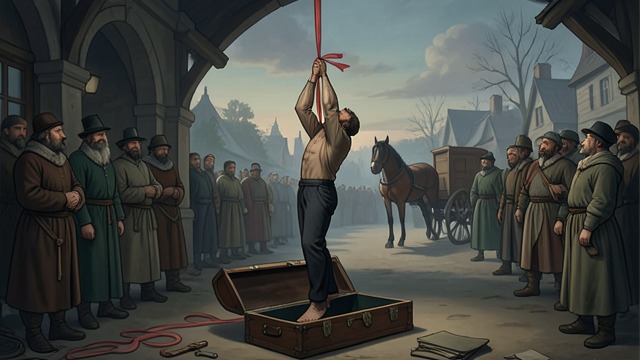
Handsome Laba returns to the village with fine clothes, a horse, and a cart, and soon becomes the object of local admiration. His visible possessions transform him from an impoverished farmhand into someone who seems able to command attention.
Labina describes how his life comes to revolve around appearance and the response it draws from others. The clothes give him status, but they also define the self he must continually display.
Freedom Lost with the Clothes
When a thief takes the contents of Laba’s trunk, Laba hangs himself with the tie that remains. The loss of his possessions exposes how thoroughly he has made his identity dependent on the admiration they bring.
The boy sees a contrast between physical escape and inner dependence. A person may seem free and powerful while carrying an invisible enclosure built from the need for recognition.
The Hare Returns
The Cage Carried Home
A Freedom Left Unused
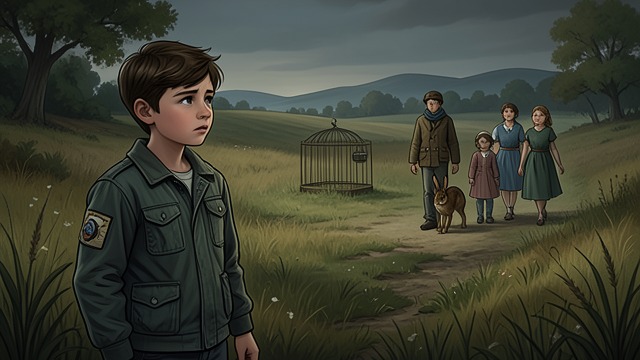
The boy remembers a hare that escapes its cage but eventually returns to it, even after discovering an open path to the meadow. Its former confinement has altered its habits and weakened its ability to live freely outside.
For the boy, the hare becomes an image of how dependence can persist after the external barrier disappears. The cage has become part of the animal’s way of understanding where it belongs.
Love as Another Boundary
When his birth parents find him, the boy recognizes them and nevertheless feels constrained by the prospect of being cared for and claimed as their son. Their love promises safety, but it also appears to limit the independence he has built through wandering.
He cannot simply escape without cost. The comparison with the hare helps explain why freedom is not only a matter of an open door: familiar attachments and long habits can draw a person back toward what also confines him.
The Pull of the Flock
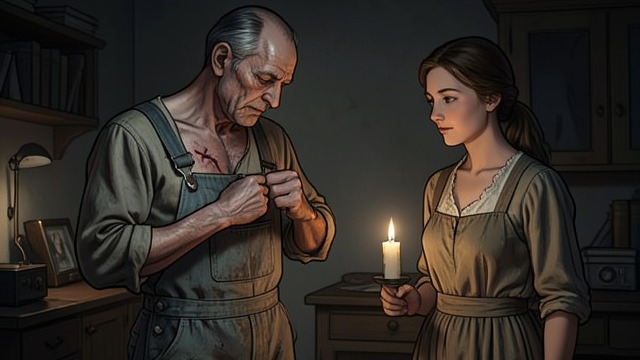
Recognition and Unchosen Belonging
The Family Claim
The boy exposes his birthmark and confirms the identity his parents have been seeking. Their reunion places him inside a family relationship that he had once thought might never return.
He understands that his parents have a claim on him, yet he is unsure whether to accept a life organized by their protection. He longs for the independent future he imagined with the Red Army and worries that reunion will close other paths.
The Painted Bird Returns
As he looks at the woman who is his mother, he feels like one of Lekh’s painted birds, pulled toward its own kind. The image links the immediate emotional force of recognition to the novel’s earlier meditation on belonging and rejection.
The reunion does not resolve the tension between safety and freedom. Instead, it leaves the boy facing a choice in which affection, kinship, and the wish to remain self-directed cannot be neatly separated.
After the boy drifts away from Olga’s village
During the boy’s time working for Lekh
During the boy’s stay with Labina, before her death
After the boy is reunited with his parents
At the moment the boy leaves the Children’s home
